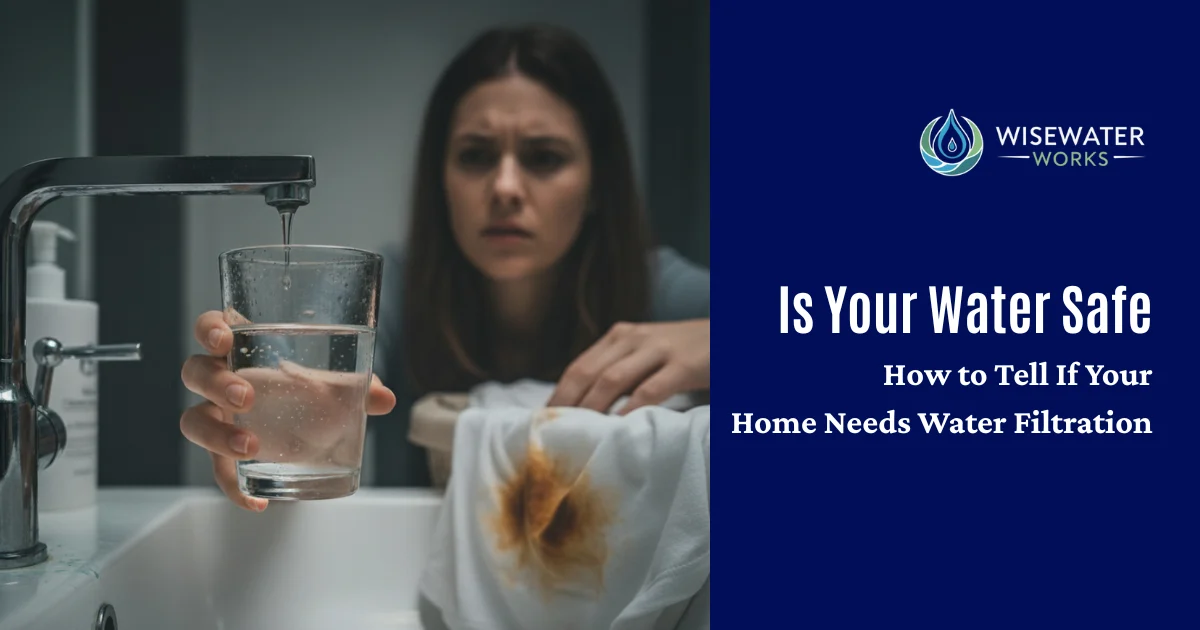
You turn on the tap, and something just seems… off. Maybe it’s a weird taste, a faint smell, or the stubborn spots on your dishes. That uncertainty is why you’re here. You’re looking for answers about your water, and you deserve more than just guesswork. Forget vague lists of problems.
If you’re unsure whether your home needs water filtration, several signs can help you determine the answer. Common indicators include unpleasant tastes or odors, cloudy or discolored water, staining on laundry or plumbing, and dry or irritated skin after bathing. These issues may suggest the presence of contaminants like chlorine, lead, or hard minerals. Testing your water is an essential step in identifying specific problems, and once you know what’s in your water, you can choose the right filtration system.
In this guide, we’ll walk you through the process of identifying water quality issues, performing a water test, and selecting the best filtration solution for your home. Take action now to ensure your water is safe and clean.
Step 1: Identifying the Symptoms of Poor Water Quality
The first step in determining whether your home needs water filtration is recognizing the signs of poor water quality. Several visible and invisible clues indicate a water problem. Understanding these symptoms can save you time and help you avoid unnecessary costs.
Signs You Can See and Taste
Some signs are immediately obvious to the naked eye and can be easily identified through taste or smell.
- Cloudy or Discolored Water: If your tap water is cloudy, milky, or has a brownish tint, it could be a sign of contaminants like rust, minerals, or microorganisms.
- Unpleasant Taste or Odor: Water that tastes metallic, like chlorine, or has a sulfur-like smell may indicate the presence of chemicals or organic material in your water.
- Staining on Laundry, Dishes, or Plumbing: Persistent stains on your clothes, dishes, or bathroom fixtures could be the result of minerals like iron or hard water buildup.
- Dry or Irritated Skin After Bathing: If your skin feels dry, tight, or irritated after a shower, it may be caused by hard water, which can strip moisture from your skin.
Signs You Can’t See, But Should Still Worry About
Even if your water looks and smells fine, there are some problems that aren’t immediately obvious.
- High Levels of Lead, PFAS, or Other Contaminants: Invisible toxins such as lead or perfluoroalkyl substances (PFAS) can lurk in your water supply. Long-term exposure to these contaminants can lead to serious health issues, such as developmental delays in children or increased cancer risks.
- Frequent Plumbing Issues or Limescale Buildup: If your pipes clog frequently or your appliances are covered in white, chalky deposits, you may be dealing with hard water, which can reduce the lifespan of your plumbing and appliances.
- Changes in Water Pressure: A sudden decrease in water pressure can be caused by mineral buildup inside your pipes, or it could signal a more serious water quality issue.
Quick Diagnostic Checklist
- Cloudy or discolored water
- Strange taste or smell (chlorine, metallic, or sulfur)
- Staining on laundry, dishes, or plumbing
- Dry, irritated skin after bathing
- Frequent plumbing issues (clogs, low pressure)
- Increased limescale buildup on appliances
Step 2: Testing Your Water: How to Confirm the Issues
Once you’ve identified some potential water quality issues, the next step is testing. Proper testing can confirm whether or not there are contaminants in your water and give you a clearer picture of the problem.
Why Water Testing Matters
Water testing helps you determine the exact contaminants in your water supply, from chlorine to heavy metals. Knowing what’s in your water is essential to choosing the right filtration system.
- Lead is a common concern in older homes, especially if you have lead pipes or old plumbing fixtures.
- Chlorine and chloramines are used by municipal water suppliers to disinfect, but they can leave an unpleasant taste or odor.
- Hard water contains high levels of calcium and magnesium, which can cause scale buildup and affect soap and detergent effectiveness.
- PFAS (per- and polyfluoroalkyl substances) are synthetic chemicals often found in well water or near industrial sites.
How to Conduct a Simple Home Water Test
Testing your water doesn’t have to be complicated. There are a variety of testing kits available that can help you identify the most common contaminants. Here’s a quick guide on how to do it:
- Purchase a Test Kit: You can buy home test kits online or at your local hardware store. Make sure it tests for a variety of contaminants.
- Collect a Sample: Fill a clean container with water from your tap. Ensure the sample comes from the main faucet to get an accurate reading.
- Follow Instructions: Most kits come with clear instructions. For a comprehensive test, you can send the sample to a certified lab.
- Review Results: If the test reveals contaminants above acceptable levels (check your local water quality standards), you may need filtration.
Expert Opinion: Common Water Contaminants in Your Area
According to water quality experts, certain regions are more likely to have specific contaminants due to environmental or infrastructure factors. For example, in areas near industrial zones or farms, PFAS and pesticides are common contaminants. Local authorities often issue reports on water quality, which can also help you understand what’s in your water.
Step 3: Choosing the Right Filtration System for Your Water Problems
Once you’ve confirmed the problem with your water, it’s time to choose the right filtration system. Different water quality issues require different solutions.
Filtration System Types and Their Pros/Cons
- Reverse Osmosis (RO) Systems: Reverse osmosis is highly effective for removing a wide range of contaminants, including lead, arsenic, fluoride, and other dissolved solids. However, it can be expensive and waste a significant amount of water.
- Best For: Homes with high levels of dissolved solids or toxic metals.
- Pros: Removes up to 99% of contaminants.
- Cons: Wastes water, and can be expensive to maintain.
- Best For: Homes with high levels of dissolved solids or toxic metals.
- UV Water Purifiers: UV systems use ultraviolet light to kill bacteria, viruses, and other microorganisms. While it’s highly effective for biological contaminants, it won’t remove chemicals or minerals.
- Best For: Well water or homes with biological contamination.
- Pros: Fast and efficient, no chemicals required.
- Cons: Doesn’t address chemical contaminants or hard water.
- Best For: Well water or homes with biological contamination.
- Carbon Filters: Activated carbon filters are great for removing chlorine, volatile organic compounds (VOCs), and other chemicals that affect water taste and smell.
- Best For: Improving taste and removing chlorine or pesticides.
- Pros: Affordable, easy to install, and effective at removing common chemicals.
- Cons: Requires regular maintenance and may not remove heavy metals.
- Best For: Improving taste and removing chlorine or pesticides.
- Water Softeners: These systems treat hard water, which contains high levels of calcium and magnesium. They work by exchanging these minerals with sodium or potassium.
- Best For: Reducing limescale buildup and soap scum.
- Pros: Extends the life of plumbing and appliances.
- Cons: Increases sodium levels in the water.
- Best For: Reducing limescale buildup and soap scum.
Tailored Filtration Solutions Based on Specific Problems
- I have discolored water – what system should I use? If your water is rusty or discolored, it could be due to sediment or iron in the water. A sediment filter or reverse osmosis system can address this.
- My water tastes like chlorine – which filter is best for me? A carbon filter will effectively remove chlorine and improve the taste.
- I have limescale buildup – how can I address hard water? A water softener is the most effective solution for hard water.
Step 4: Real-Life Case Studies – Water Filtration in Action
Case Study 1: The Home with High Lead Levels
Problem: A family living in an old house discovered high levels of lead in their water during a routine water test.
Solution: They installed a reverse osmosis system, which successfully removed 99% of the lead and other harmful contaminants.
Result: After installing the RO system, the family noticed a significant improvement in the taste and clarity of their water. Their health risks were also significantly reduced.
Case Study 2: Hard Water and Stained Fixtures
Problem: A couple in a suburban neighborhood had issues with hard water. They constantly dealt with mineral stains on their laundry and bathroom fixtures.
Solution: They installed a water softener, which filtered out the calcium and magnesium causing the problem.
Result: Their appliances lasted longer, their laundry was free from mineral stains, and their soap and shampoo worked better.
Case Study 3: A Rural Home with Well Water Issues
Problem: A family in a rural area relied on well water, which had high levels of bacteria and organic matter.
Solution: They installed a UV water purifier to kill bacteria and viruses.
Result: The family’s water quality improved dramatically, and they no longer had to worry about illness caused by unsafe water.
Step 5: Maintaining Your Filtration System
Proper maintenance is key to ensuring that your filtration system works efficiently for years to come.
Routine Maintenance and Filter Replacement
- Reverse Osmosis: Replace filters every 6-12 months depending on usage.
- Carbon Filters: Change every 3-6 months or as recommended by the manufacturer.
- Water Softeners: Refill salt regularly and check for build-up every 6 months.
Common Mistakes to Avoid When Installing and Maintaining a Filtration System
- Not Following Manufacturer Instructions: Always follow the manufacturer’s maintenance guidelines to keep your system running smoothly.
- Neglecting Regular Maintenance: Filtration systems that are not maintained properly can become less effective and even contaminate your water.
Forge a Sustainable Future with Wise Water Works
In a world where water is an increasingly precious resource, making every drop count is not just a choice, it’s a necessity. At Wise Water Works, we are committed to pioneering a future where sustainable water management is at the heart of thriving homes, businesses, and communities. Our innovative solutions and expert guidance are designed to empower you to take control of your water usage, reduce waste, and contribute to a healthier planet, all while improving your bottom line.
The journey to water efficiency is a collaborative one, and we are your dedicated partners every step of the way. From initial consultation to the implementation of cutting-edge technologies and best practices, our team is equipped with the knowledge and passion to help you achieve your water conservation goals. We believe that responsible water stewardship is a collective responsibility, and by working together, we can ensure a resilient and water-secure future for generations to come.
Don’t let your water, and your money go down the drain. Embrace a smarter approach to water management.
Contact Wise Water Works today to discover how our tailored solutions can benefit you. Let’s build a sustainable and prosperous future, one drop at a time.