
What’s really in that crystal-clear glass you are drinking? Did you know, every drop looks pure, but what you can’t see matters most. Sediment, heavy metals, and chemical traces move quietly through your supply, damaging pipes and even straining appliances. Microbes slip through aging infrastructure or treatment lapses. Your home deserves better protection.
The solution? Stop problems at the source. But how do whole-home water filtration systems work?
A whole-home system works in stages. First, it blocks sediment and debris. Next, carbon filters remove chemicals and odors. Then, softening removes hard minerals. Finally, UV light kills microbes for clean water everywhere.
Ready to see the difference? At Wise Water Works, we specialize in premium whole-home water filtration tailored to your local supply. Our systems combine advanced technology, durable components, and expert installation.
What is a Whole Home Water Filter
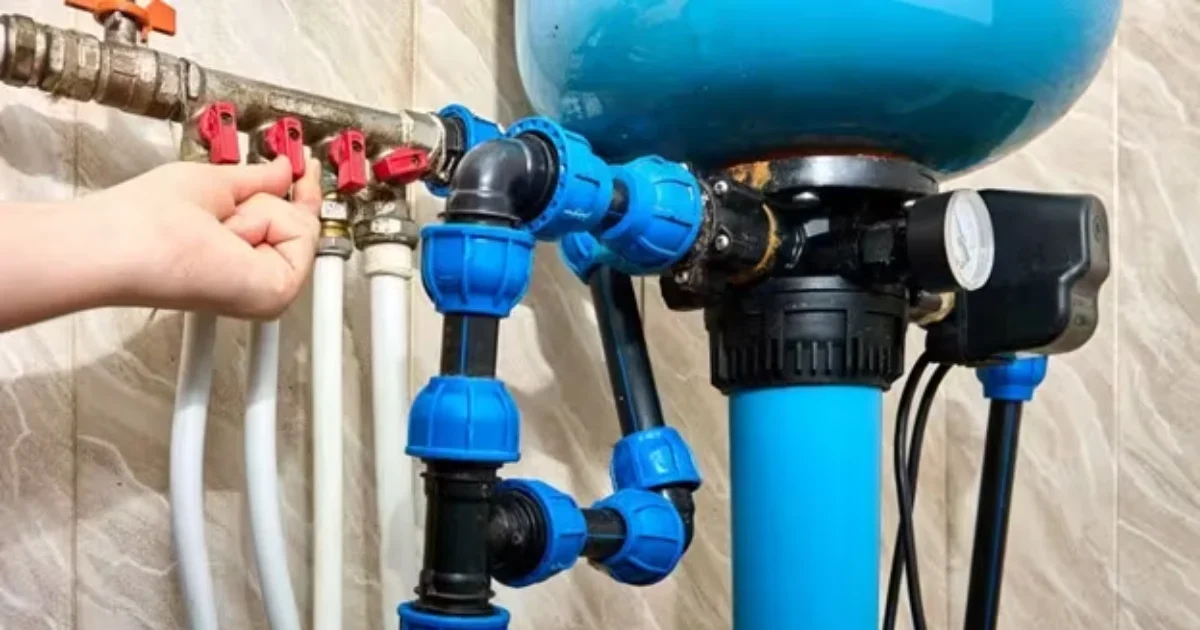
A whole-home water filter is a point-of-entry system installed where the main water line enters your home. It treats every drop of water before it flows to faucets, showers, and appliances.
You get consistent protection against sediment, chlorine, heavy metals, or microbes, depending on the system design. An under-sink filter works at a single tap, but a whole-home filter safeguards your entire plumbing network. This approach improves water quality throughout your home and extends appliance life.
Advantages of Having a Whole Home Water Filtration System
Extended appliance lifespan
Scale forms silently inside heaters, dishwashers, and washers, coating their parts with calcium deposits. As buildup grows, efficiency drops, and breakdowns come sooner. With filtration blocking minerals at the entry line, your appliances run cleaner and last far longer.
Healthier skin and hair
Each shower with chlorinated water strips natural oils from your skin. Over time, this dryness can worsen eczema and leave hair brittle. When chlorine and sediment are removed, showers feel softer, and your skin and hair regain their natural balance.
Reduced risk from contaminants
Municipal treatment cannot remove every impurity. Disinfection byproducts, trace metals, and microbial residues still reach your tap. These accumulate with daily use, raising health concerns. A whole-home filter captures them early, giving you safer water at every faucet.
Plumbing and pipe protection
Sediment moves like sandpaper through your plumbing. It scratches copper and PEX lines, eventually creating leaks and discolored water. By intercepting these particles at entry, filtration keeps your pipes intact, avoiding costly replacements years down the line.
Protection during treatment lapses
Floods, pipe breaks, or equipment failures often trigger boil-water advisories. In those moments, you rely on your own system. With UV and carbon filtration in place, your family drinks and bathes in safe water without interruption.
How Do Whole Home Filters Work?
1. Sediment filters
A sediment filter is a point-of-entry mechanical filter. It removes sand, silt, rust, and suspended solids before water reaches other treatment media. You can easily install it on well systems with turbidity or on city lines with corroded pipes.
It protects carbon tanks, UV lamps, and softeners from clogging or abrasion. Filters are sized by micron rating, usually 50 down to 1 micron, depending on water quality.
How a Sediment Filter Works
Step 1: Water comes straight from your main line into the filter housing. At this point, it still carries grit, rust, and fine silt. The pressure pushes it forward, preparing it for the first stage of separation.
Step 2: The filter medium stands like a wall in the path of that flow. Micron-sized pores stop larger solids instantly, yet water molecules keep moving through. This is the moment your raw water starts becoming usable water.
Step 3: Depth cartridges work in zones, not just on the surface. Coarse particles get trapped outside, then finer debris embeds deeper inside. This layered capture keeps the flow stable and delays clogging, so your system works longer.
Step 4: As particles collect, they compress into the media. The flow now meets more resistance, and you see a pressure drop on your gauge. When that drop hits about 10 psi, it’s time for a cartridge change or a backwash cycle.
Step 5: Now the stream is free of suspended solids. It flows out to the next stage, such as carbon adsorption or UV disinfection. Because the sediment is gone, those systems can perform at full efficiency.
2. Activated carbon filters
When your water still carries chlorine or chemical odors, an activated carbon filter takes over. This filter is mainly used in city water, where disinfectants, pesticides, and volatile organic compounds (VOCs) are common.
You’ll see it right after the sediment stage, where it handles what physical filtration cannot. In whole-home systems, granular activated carbon (GAC) captures most contaminants, while catalytic carbon goes further by breaking down tough chloramines.
How an Activated Carbon Filter Works
Step 1: After sediment is removed, water flows into the carbon tank under pressure. At this stage, it still carries chlorine, VOCs, and other dissolved chemicals that physical filters cannot block.
Step 2: The media is filled with microscopic pores. As water passes through, chemical molecules collide with these surfaces. Instead of slipping past, they bond tightly to the carbon structure.
Step 3: This process is called adsorption. Chlorine gets captured, pesticides cling to the pores, and VOCs attach deep inside the carbon matrix. Catalytic carbon takes it further, breaking apart chloramine molecules into harmless byproducts.
Step 4: At first, the top layer of media does most of the work. As more pores fill, the treatment zone moves deeper into the bed. Once contaminants break through the entire bed, the media is exhausted and needs replacement.
Step 5: The water leaving this stage is free of chlorine taste, chemical odor, and organic compounds. It continues downstream toward softeners, UV disinfection, or directly into your home’s plumbing system.
3. KDF (Kinetic Degradation Fluxion) Filters
When your water carries chlorine, heavy metals, or even that “rotten-egg” odor from hydrogen sulfide, a KDF filter is often the solution. This filter uses a unique copper-zinc alloy to target contaminants that both city and well water can contain. In most whole-home setups, KDF media is paired with activated carbon, as it helps extend the carbon’s lifespan and boosts overall chemical removal.
How It Works
KDF filters work through a chemical process known as redox (oxidation-reduction).
- Chemical Reaction: As water flows through the copper-zinc granules, an electrochemical reaction occurs. This process converts harmful contaminants into harmless components.
- Chlorine and Heavy Metal Removal: Free chlorine is turned into simple, harmless chloride. Heavy metals like lead, mercury, and iron bond to the surface of the media, effectively removing them from the water.
- Microbe Control: The redox process also creates an environment that is hostile to bacteria, algae, and fungi. This keeps the filter media clean and prevents microbial growth within your system.
Maintenance: Over time, the filter needs a strong backwash to flush away the deposited metals and byproducts. This restores its effectiveness and ensures it protects your home for years to come.
4. Water Softeners
A water softener is an ion exchange system designed to remove hardness minerals. It is mainly used in homes where calcium and magnesium levels exceed 7 grains per gallon. Hard water causes scaling in heaters, plumbing, and appliances, and leaves soap scum on fixtures.
A softener prevents these issues by exchanging hardness ions with sodium or potassium, extending equipment life and improving water quality across the home.
How a Water Softener Works
Water softeners work through a process called ion exchange. As hard water enters the resin tank, calcium and magnesium ions attach to the charged resin beads. These hardness minerals are then exchanged for sodium or potassium ions.
The result is water free from scale-forming minerals, protecting your plumbing and improving daily water use. During regeneration, a brine solution flushes the resin, restoring its capacity and preparing it for the next cycle.
How To Choose The Best Whole Home Water Filtration System?
The best whole-home system for you depends on more than taste or odor. Testing, sizing, and maintenance planning all play a role in finding a filter that truly solves your problems.
Test your water first
You can’t pick a system by guesswork. A water test shows exactly what’s in your supply, like chlorine, iron, hardness minerals, or bacteria, so you know what needs to be treated.
Match the filter to the problem
Each system is designed for a purpose. Carbon removes chlorine and chemical odors. Softeners handle calcium and magnesium. UV kills microbes. KDF tackles heavy metals. Matching a filter to the problem avoids wasted money.
Check the flow rate
Every home has a peak demand, when showers, laundry, and appliances run together. If your system is undersized, pressure will drop. A properly sized filter keeps the flow steady without sacrificing performance.
Look at maintenance needs
All systems require upkeep. Cartridges clog with sediment, resin needs brine for regeneration, and UV lamps lose strength after a year. Choose a design you can maintain on schedule without strain.
Think about lifetime costs
Upfront price is only part of the equation. Media replacement, salt, or electricity add long-term costs. Comparing these in advance helps you choose a system that delivers value year after year.
In Closing
Whole-home water filtration changes how your home experiences water. By treating sediment, chemicals, hardness, and microbes at the entry point, you gain cleaner water, healthier living, and appliances that last longer. More importantly, you avoid hidden problems that often show up as costly repairs. Choosing the right system is a decision that protects your family and your home for years to come.
Choosing the right system is a decision that protects your family and your home for years to come. If you’re ready to get started, the experts at Wise Water Works are here to help. We design and install custom systems built for your Houston-area water. Contact us today for a free water test and consultation!
Frequently Asked Questions
Question: How often should a whole-home filter be replaced?
Answer: Sediment cartridges usually last 6–12 months, carbon media 12–24 months, and UV lamps about one year. Timely replacement keeps your system working at full efficiency.
Question: Does a whole-home filter reduce water pressure?
Answer: It can if the system is undersized or filters are clogged. Choosing the right capacity and replacing filters on schedule keeps pressure stable throughout your home.
Question: Can one system remove all contaminants?
Answer: No single filter covers everything. Most homes need a combination, sediment, carbon, softener, and UV, working together to handle different contaminants for complete protection.
Question: Is a water softener the same as a whole-home filter?
Answer: No. A softener only removes hardness minerals like calcium and magnesium. A whole-home filter targets multiple contaminants depending on your water quality.
Question: How do I know which system my home needs?
Answer: Start with a water test. It reveals the exact contaminants present, so you can match your home with the right filtration stages and avoid unnecessary costs.